
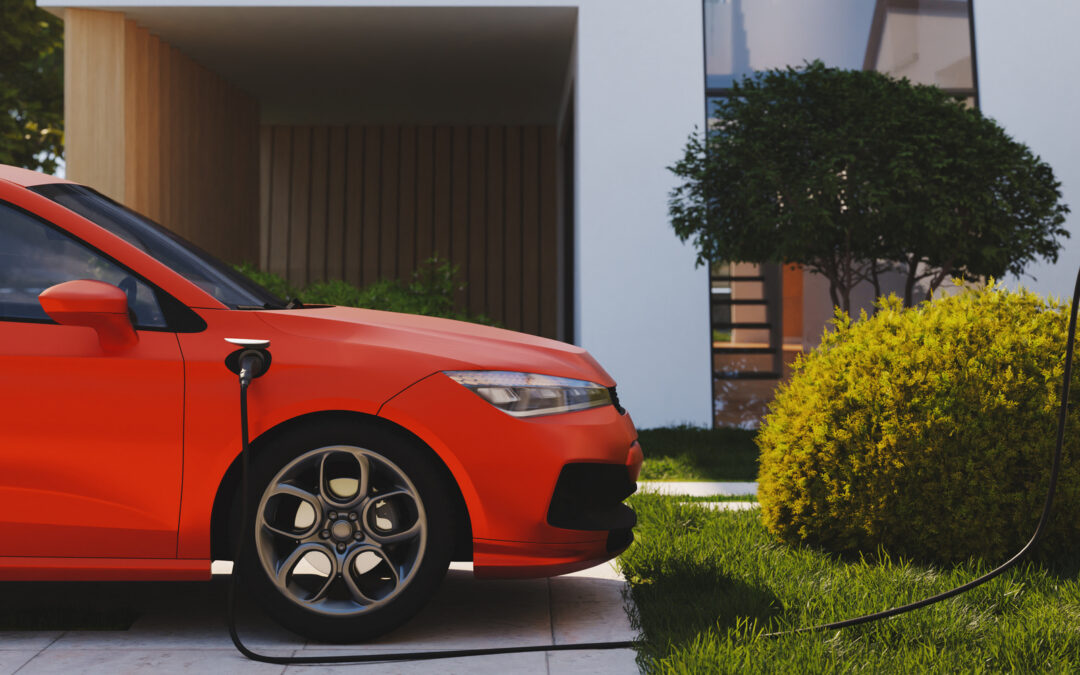
Charging an electric vehicle at home will increase your electricity usage because every kilowatt-hour added to your EV battery comes through your home’s electric meter. How much your bill changes depends on your EV, how much you drive, charging habits, and your electricity plan. Choosing a competitively priced electricity plan can help keep those added charging costs manageable.
Do You Need a Special EV Electricity Plan?
Not necessarily.
Some electricity providers promote plans specifically for EV owners. These plans may advertise discounted or free charging during certain hours.
That can sound appealing, but an EV plan shouldn’t be evaluated based on one feature alone.
You should look at the entire Electricity Facts Label.
Consider the electricity rate, TDU delivery charges, base charges, usage requirements, time restrictions, and other plan details.
For example, a plan offering special overnight charging doesn’t automatically mean it will provide the lowest overall electricity cost for your household.
Your EV isn’t the only thing using electricity.
Your air conditioner, refrigerator, lights, appliances, electronics, water heater, and everything else in your home contribute to your monthly usage.
That’s why comparing the overall plan matters.
What About 4Change Energy and EV Charging?
4Change Energy doesn’t currently offer an electricity plan specifically designed for electric vehicles.
And that’s okay.
Instead of adding another specialized plan with complicated charging windows or EV-specific features, 4Change Energy focuses on offering competitive electricity plans that are easy to understand.
For an EV owner, a competitive electricity price can be especially valuable because charging increases the amount of electricity your household consumes.
Think about it this way:
If your EV adds hundreds of kilowatt-hours to your monthly electricity usage, you’re buying more electricity than you did before.
The price you pay for those additional kilowatt-hours matters.
A straightforward, competitively priced electricity plan can help keep the added cost of EV charging under control without requiring your household to choose an electricity plan solely around your car.
How Much Electricity Does EV Charging Use?
Buying an electric vehicle can change more than what’s parked in your driveway. If you charge at home, it can also change how much electricity your household uses each month.
EV charging electricity usage varies widely. Your vehicle’s efficiency, daily mileage, battery size, weather, and charging habits can all affect the amount of electricity you use.
The U.S. Department of Energy reported that households with EVs used an average of 2,363 kilowatt-hours (kWh) annually for EV charging in 2020. That’s roughly 197 kWh per month when averaged across the year.
Drivers who put significantly more miles on their vehicles could use much more. DOE also provides an example of an EV rated at 30 kWh per 100 miles. Driving that vehicle 12,000 miles would require an estimated 3,600 kWh annually.
That’s why it’s important to think about your EV as another significant source of household electricity usage.
How Does Charging an EV Affect Your Electric Bill?
The math is fairly simple.
When you charge your EV at home, your charger pulls electricity through your home’s meter. Those additional kilowatt-hours become part of the electricity usage on your bill.
For example, imagine your EV requires 300 kWh of charging during a month.
At an electricity rate of 12 cents per kWh, the energy portion would equal $36.
At 16 cents per kWh, those same 300 kWh would equal $48.
At 20 cents per kWh, they would equal $60.
Those examples are simplified and don’t represent a specific 4Change Energy plan or your total billed rate. Actual bills can include TDU delivery charges, fixed charges, taxes, fees, or other components described in your Electricity Facts Label.
But they demonstrate something important:
When you use more electricity, the price you’re paying for that electricity matters.
How Much Electricity Does an EV Use Per Mile?
Not every EV uses electricity at the same rate.
DOE data for model-year 2024 EVs showed combined city/highway efficiency ranging from 1.49 miles per kWh to 4.17 miles per kWh. Vehicle type also makes a difference, with efficiency varying substantially among cars and larger SUVs.
That means two Texas households could drive the same number of miles but see very different EV charging electricity usage.
Your driving habits matter, too.
Someone commuting 50 miles every weekday will generally need considerably more charging than someone driving a few miles around town.
Before estimating what an EV will add to your electric bill, look at the vehicle’s kWh-per-100-miles or miles-per-kWh rating and consider how many miles you typically drive.
Level 1 vs. Level 2 Home Charging
Most EV owners who charge at home use Level 1 or Level 2 charging.
Level 1 charging uses a standard 120-volt outlet. Depending on the vehicle and driving habits, it may be enough for drivers who don’t need to replenish a large amount of range every night.
Level 2 charging typically uses a 240-volt connection and can charge an EV much faster. The Department of Energy notes that many EV owners install Level 2 equipment at home for faster charging.
A faster charger doesn’t automatically mean your vehicle needs more energy to travel the same distance. It primarily changes how quickly electricity can be delivered to the battery.
Whether you use Level 1 or Level 2, however, those charging kilowatt-hours become part of your household electricity usage.
When Should You Charge Your EV?
For households on electricity plans where the price doesn’t change based on the time of day, moving your charging session to a different hour may not change the retail energy rate you pay.
However, charging overnight can still be convenient.
Many EV owners plug their vehicles in when they get home and allow them to charge while they sleep. DOE says most EV drivers charge overnight at home using Level 1 or Level 2 equipment.
If you’re considering a time-of-use or EV-specific plan from any electricity provider, pay close attention to when discounted rates apply.
Then compare those potential savings against what you’ll pay for electricity during the rest of the day.
Your entire house matters—not just the vehicle in your garage.
How Can EV Owners Manage Electricity Usage?
The easiest place to start is knowing how much energy your vehicle actually uses.
Many EVs and home chargers provide charging history that shows the number of kilowatt-hours used during each session. Network-connected chargers may also provide historical usage data.
Compare that information with your household electricity usage.
If your EV uses 250 kWh during a month and your home uses another 1,000 kWh, you now have a much clearer picture of where your 1,250 kWh of total usage came from.
You can also estimate EV charging electricity usage before purchasing an EV.
Find the vehicle’s kWh-per-100-miles rating and multiply it by the number of miles you expect to drive.
For example:
30 kWh per 100 miles × 1,000 miles per month = approximately 300 kWh.
Real-world charging can differ because of driving conditions, weather, charging losses, and other factors, but the calculation gives you a useful starting point.
Does an EV Make a Low Electricity Rate More Important?
It can.
EV ownership essentially moves some of your transportation energy spending from the gas station to your electric bill.
That means your household may purchase substantially more electricity than it did before.
DOE estimates show just how meaningful that additional usage can become. One DOE consumer resource estimates that an average all-electric vehicle traveling 15,000 miles annually could use around 5,000 kWh of electricity.
For a high-usage household, differences in electricity pricing can therefore become increasingly important.
It’s another reason EV owners should look beyond flashy plan features and compare the actual numbers.
Compare the Whole Electricity Plan
Electric vehicles are changing how many Texas households think about electricity.
Instead of electricity only powering your home, it may now be powering your commute, school drop-offs, grocery runs, road trips, and everything in between.
That makes understanding EV charging electricity usage increasingly important.
But you don’t necessarily need a complicated EV-specific electricity plan.
Look at how much electricity your vehicle is likely to use. Estimate how many miles you’ll drive. Review the Electricity Facts Label. Then consider what you’ll pay for electricity across your entire household.
4Change Energy offers competitive Texas electricity plans without requiring you to build your electricity routine around a specialized EV plan.
Whether you’re charging an EV, cooling your home during a Texas summer, or simply keeping the lights on, a competitive electricity price can help make every kilowatt-hour count.
Frequently Asked Questions
Does charging an electric car increase your electric bill?
Yes. Home EV charging increases household electricity usage because the energy used to charge the battery passes through your home’s electric meter. The amount your bill increases depends on your vehicle, mileage, electricity price, and other plan charges.
How many kWh does an electric car use?
It depends on the vehicle and how far you drive. EV efficiency varies considerably among models. Looking at the vehicle’s kWh-per-100-miles rating is one of the easiest ways to estimate monthly EV charging electricity usage.
Is it cheaper to charge an EV at home?
Home charging is often one of the most convenient and cost-effective charging options. DOE notes that public charging, particularly DC fast charging, normally costs more than electricity used for charging at home.
Does 4Change Energy have an EV electricity plan?
4Change Energy does not currently offer a dedicated EV electricity plan. Instead, customers can compare 4Change Energy’s available electricity plans and evaluate the overall price and plan structure based on their household’s electricity needs, including EV charging.
Should I choose an EV plan or a regular electricity plan?
Compare the complete cost of each option. An EV-specific feature may save money during certain charging hours, while another plan may offer competitive pricing across all of your household usage. Review the Electricity Facts Label before choosing a plan.